 Upgrade to Premium Now
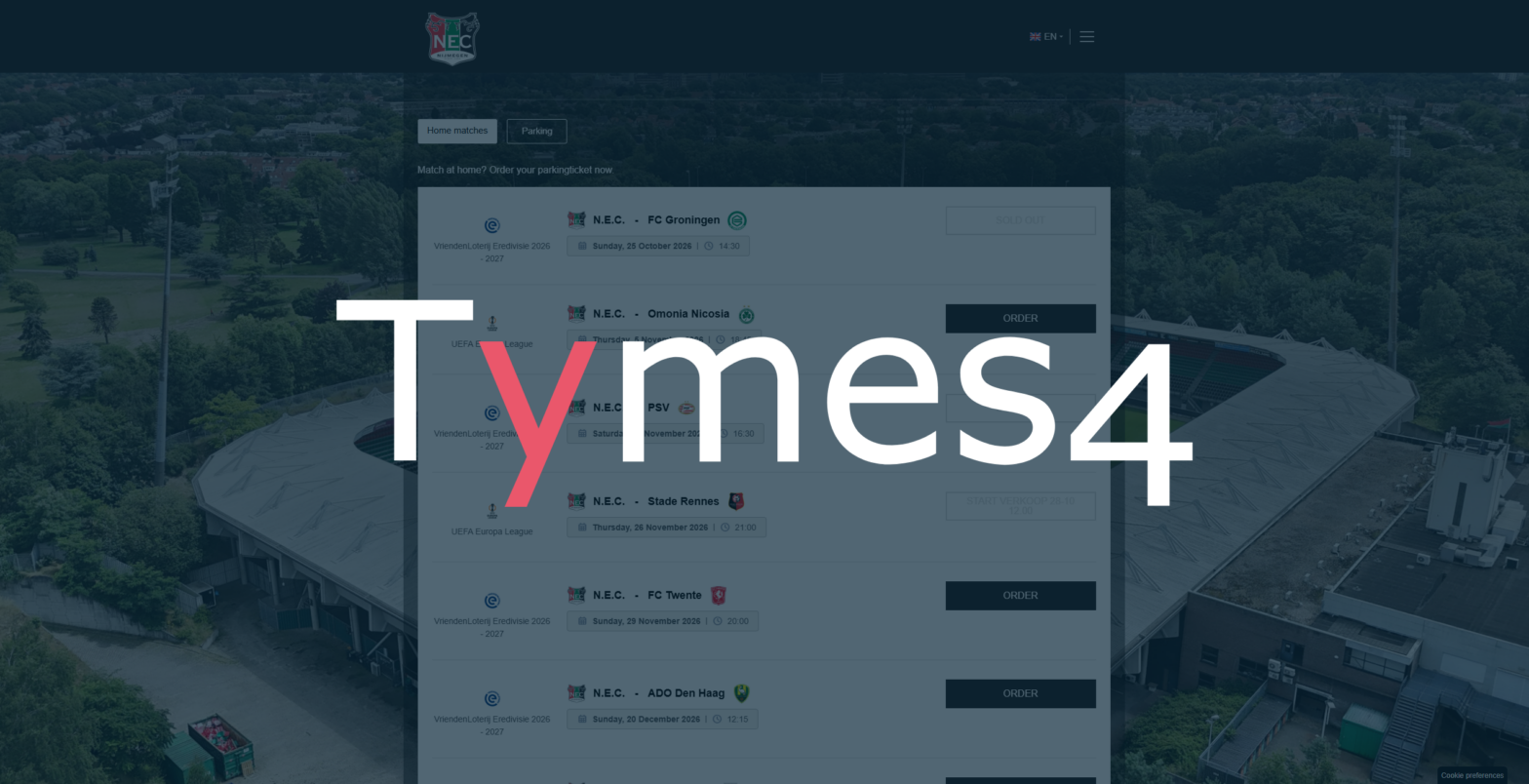
Managing business tickets can mean handling individual requests, guest invitations and unused seats. NEC Nijmegen is using Tymes4 to give corporate customers more control while reducing administrative work for the club.
For football clubs, managing business tickets involves more than selling season seats to sponsors. Corporate customers invite guests, distribute tickets among employees, request additional seats and sometimes change their plans shortly before a match.
Each request can require action from the club’s commercial department. When the process depends on emails, forms and manual bookings, even a simple ticket request can take several days.
Cup and European fixtures create further challenges. These matches may not be included in every sponsorship agreement, while companies holding business season tickets can have different purchasing rights. Clubs must manage these arrangements while keeping the process convenient for their corporate customers.
NEC Nijmegen faced similar challenges and introduced Tymes4 Business Ticketing, developed by Ormer ICT, to simplify ticket management for sponsors and club employees.
From manual requests to instant ticket access
“The biggest problem we had was speed and administration,” explains Kelly van Mil of NEC Nijmegen.
Previously, business customers submitted a form requesting a ticket. Club employees then processed the request, booked the ticket and sent it back to the customer.
A request submitted on Friday evening, for example, might not be processed until Monday. Despite having an existing relationship with NEC, a customer could wait three days to receive their ticket.
With Tymes4, business customers can now complete the process themselves.
“With the new module customers can book their own ticket so this solved both problems. We don’t have the administration handling anymore. And the customers got their ticket instantly,” says van Mil.
Sponsors can access their tickets directly through the platform without waiting for staff to process individual requests. For NEC, this removes routine administrative work from the ticketing department.
Why Tymes4 developed a dedicated business ticketing module
The problems NEC experienced were familiar to Frank van Eijsden of Ormer ICT.
The company had encountered similar difficulties through its work with football clubs and its own experience of holding business tickets.
“You always have to hassle with tickets in distributing them,” says van Eijsden.
Additional fixtures were particularly challenging. When clubs qualified for another cup round, commercial departments had to contact sponsors, confirm their entitlements, collect orders and arrange payments.
“We’ve had our clients asking when they played an additional cup match that wasn’t included in the season ticket, how on earth are we going to manage this?” explains van Eijsden.
Some sponsors receive European fixtures as part of their packages, while others must purchase tickets separately. Tymes4 was developed to handle such differences through a dedicated B2B environment, either independently or integrated into the broader ticketing platform.
One platform, different ticketing rules
At the beginning of the season, clubs allocate business season tickets through the Tymes4 back office. Individual tickets with unique barcodes then become available automatically for each match in the sponsor’s online portal.
Companies can distribute tickets among employees, invite guests and manage their allocations without repeatedly contacting the club.
“The sponsor can give employees access to a portal, they can invite their own guests and guests can accept the tickets, of course, can cancel,” explains van Eijsden.
Tickets can be downloaded, forwarded, saved in mobile wallets or accessed through club applications. Tymes4 integrates with Bundeling and allows clubs to customise the portal to their own branding.
The platform also enables business customers to purchase additional tickets, parking and memberships. Clubs can offer prepaid ticket bundles, allowing sponsors to redeem tickets across different matches.
Its main feature is the ability to apply different conditions to individual companies and fixtures.
“It’s really rule based and really flexible,” says van Eijsden.
Clubs can determine who may purchase particular tickets, restrict sales to business members and decide which payment methods are available. One sponsor may pay by invoice, while another must complete an immediate payment.
For cup or European fixtures outside existing packages, clubs can also allow sponsors to reclaim their usual seats online.
Making unused business seats available again
NEC has also introduced secondary ticketing for business customers.
When sponsors cannot attend a match, they can offer their tickets for resale instead of leaving seats unused.
“We use the resale function as an extra service to our customers. If they can’t attend the match they can resell the ticket and get a percentage of the retail price,” explains van Mil.
The club controls the process, including who can purchase resold tickets, their price and the compensation received by the original holder. Once a ticket is resold, Tymes4 automatically blocks the previous barcode and issues a new one.
For clubs with sold-out business sections, this offers another way to make previously allocated seats available.
At NEC, the response from corporate customers has been encouraging.
“The customers have to ‘discover’ this function yet. But so far we get very positive feedback that it is possible to do so,” says van Mil.
NEC introduces new functions gradually, collecting feedback from business customers and adjusting settings when necessary.
The club’s experience illustrates the practical difference between manual ticket handling and self-service. Requests that previously required staff intervention can now be completed directly by sponsors, while additional purchases and resale are managed within the same platform.
For NEC, Tymes4 has brought business ticket management into one digital environment, giving corporate customers greater flexibility and reducing the administrative work involved in servicing them.